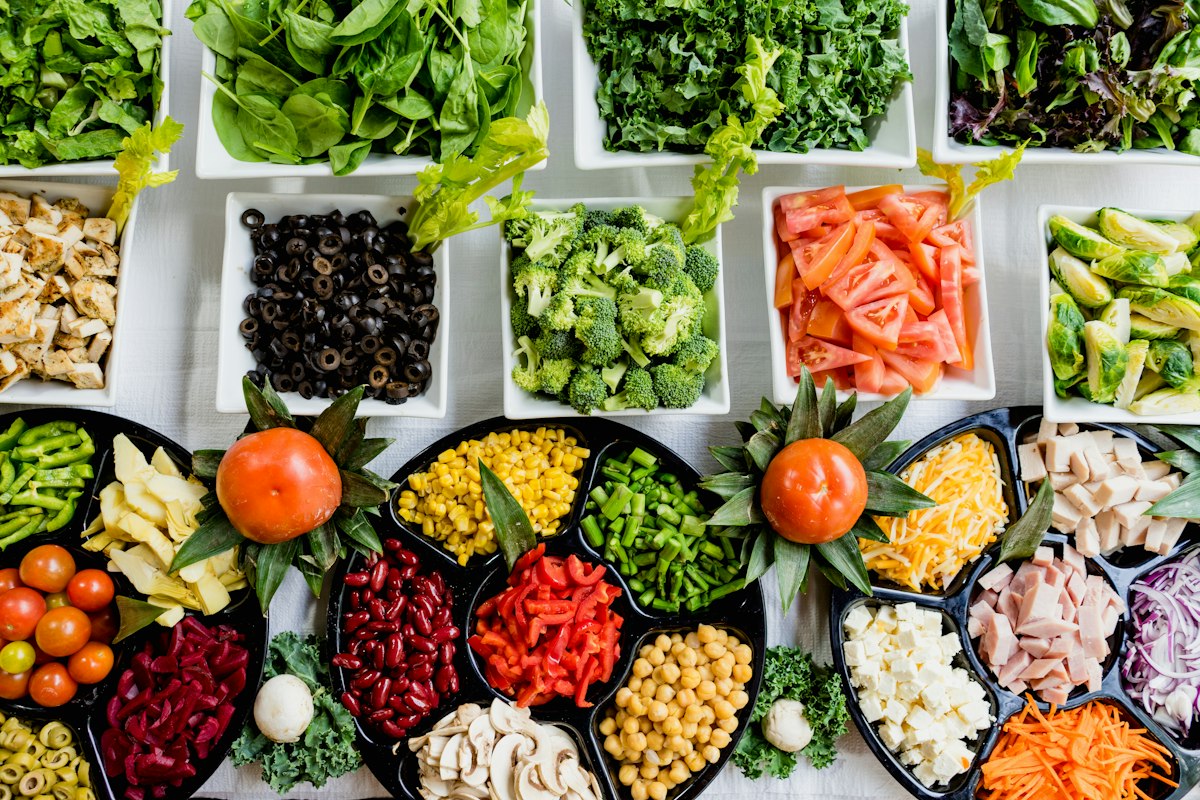
The DASH diet — Dietary Approaches to Stop Hypertension — was developed by the US National Institutes of Health specifically to lower blood pressure through diet alone. It has since been ranked the most consistently evidence-backed dietary pattern for overall health by nutrition researchers, and one of the most effective for sustainable weight loss when combined with a calorie target.
Unlike paleo or keto, DASH doesn't eliminate entire food groups. It's a framework of proportions: more vegetables, fruits, whole grains, and lean protein; less sodium, saturated fat, red meat, and sugar. The question most people have when starting is simple — how many calories do I actually eat? This guide answers that, and tells you exactly what those calories should look like.
What Is the DASH Diet, Exactly?
DASH is a whole-diet pattern — not a list of superfoods, not a supplement regimen, and not a short-term cleanse. It was designed as a long-term eating framework that people can maintain indefinitely, which is one reason it consistently outperforms more restrictive diets in long-term compliance studies.
The four nutritional pillars that drive DASH's blood pressure benefits are:
- High potassium — from vegetables, fruit, legumes, and low-fat dairy. Potassium counteracts sodium's effect on blood pressure.
- High magnesium — from nuts, seeds, whole grains, and leafy vegetables. Magnesium relaxes blood vessels.
- High calcium — from low-fat dairy and calcium-rich vegetables. Calcium supports vascular function.
- Low sodium — limiting processed foods, cured meats, and added salt. This is the most direct dietary lever for blood pressure reduction.
Weight loss, when it occurs on DASH, is a secondary benefit of the pattern's food composition — high fibre, high protein, high volume foods naturally reduce appetite and calorie intake. But the blood pressure benefit is independent of weight loss and occurs even at the same body weight.
DASH Diet Calorie Targets: The Official Tiers
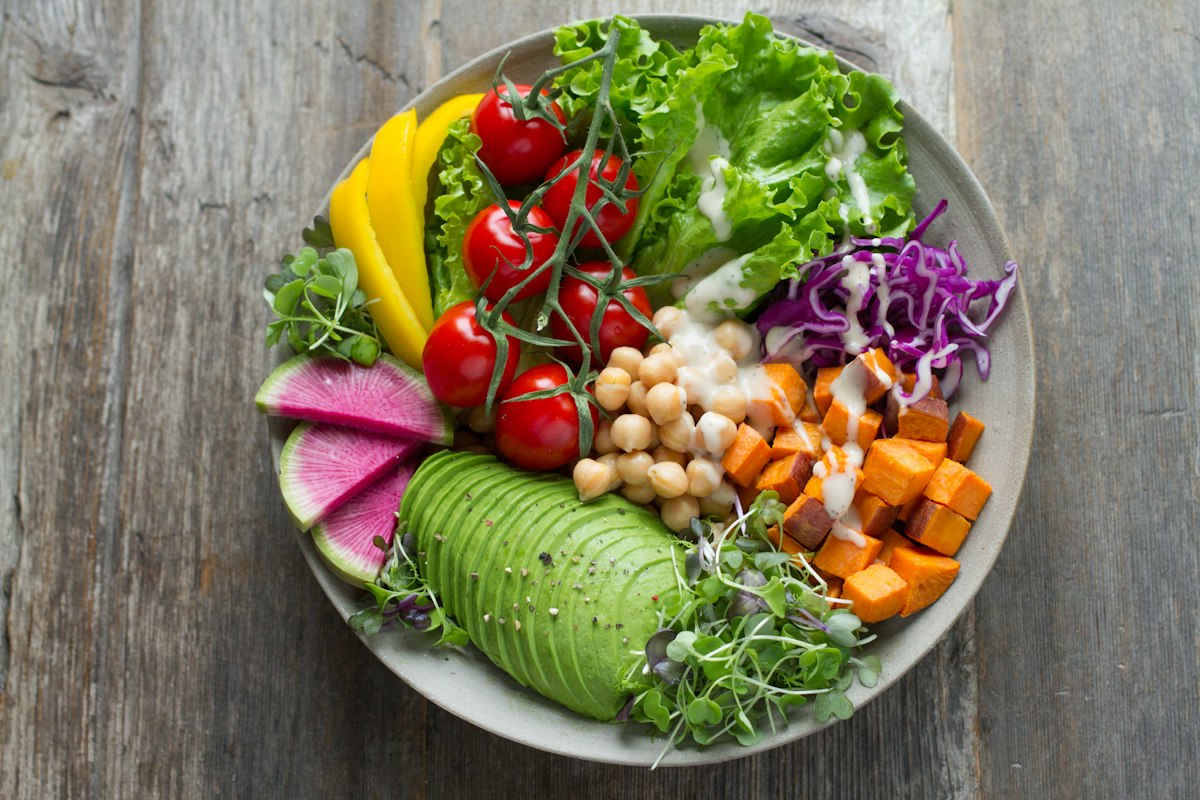
The original DASH research used three calorie tiers to accommodate different body sizes and activity levels. These are starting points — your actual target should be calculated from your personal TDEE.
| Calorie Level | Suitable For | Daily Sodium Limit | Goal |
|---|---|---|---|
| 1,600 kcal/day | Smaller adults, sedentary women, weight loss | 2,300mg | Fat loss or BP management |
| 2,000 kcal/day | Moderately active adults, average maintenance | 2,300mg | Maintenance or mild loss |
| 2,600 kcal/day | Active adults, larger men, maintenance | 2,300mg | Maintenance or performance |
| Lower-sodium DASH | Anyone with hypertension or high BP risk | 1,500mg | Maximum BP reduction |
The official tiers are approximations. Your actual calorie target depends on your height, weight, age, sex, and activity level — not a generalised category.
Step 1: Calculate your TDEE using EatHelper's free calculator.
Step 2: Set your adjustment: subtract 300–500 kcal for fat loss, stay at TDEE for maintenance.
Step 3: Build your DASH food groups around that number using the serving guide below.
DASH Food Groups: What to Eat and How Much
DASH organises food into groups with recommended daily serving ranges. The servings below are calibrated for a 2,000 kcal/day intake — scale proportionally for higher or lower targets.
Tiles with lime tops are "eat freely" anchors. Teal tops are important daily contributors with moderate portions. Amber tops are limit categories — they're allowed but shouldn't dominate the plate or the day.
The Sodium Component: Where Most People Struggle
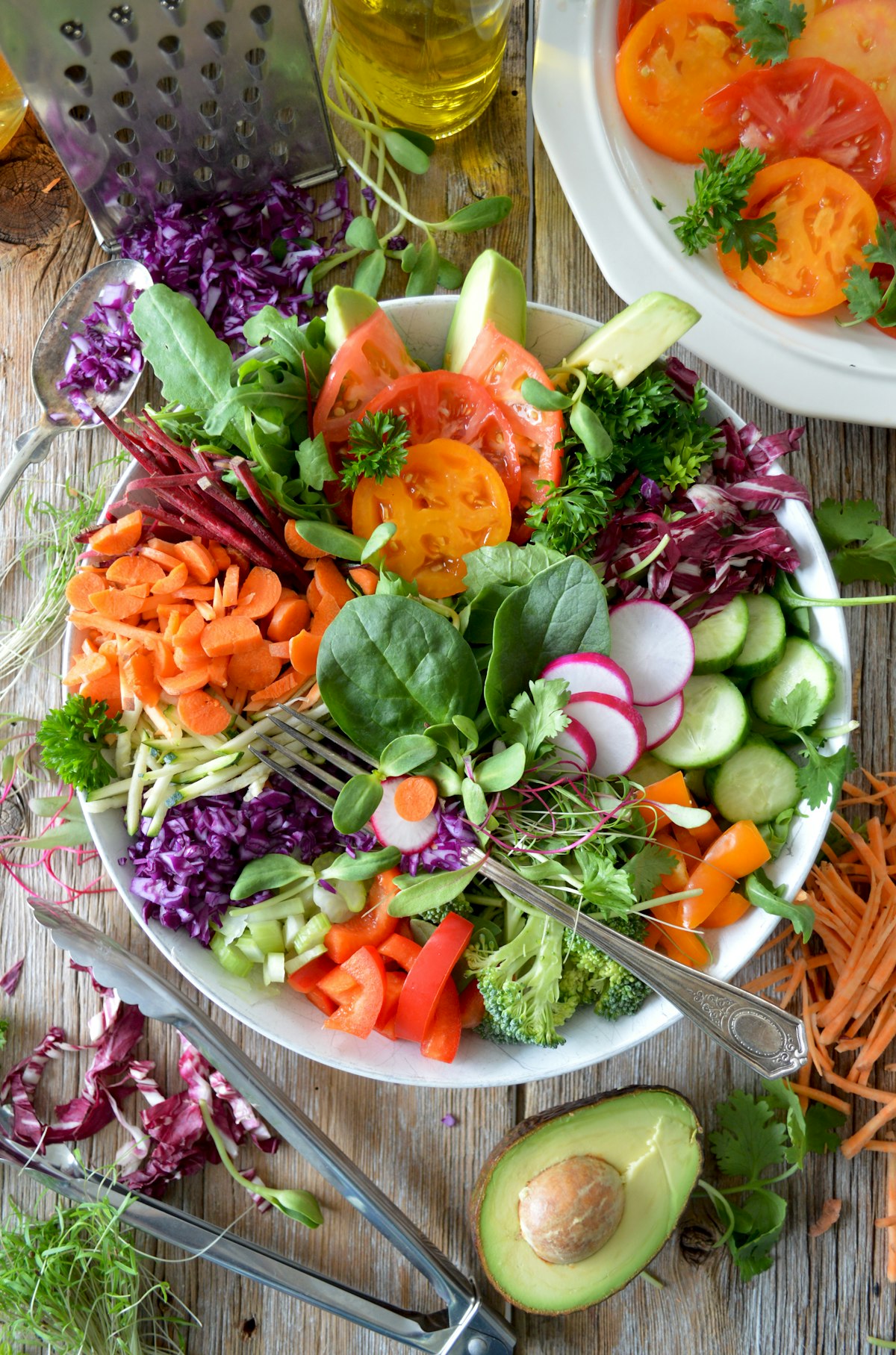
Sodium reduction is the most clinically impactful component of DASH — and the hardest to implement. The target of 2,300mg/day (or 1,500mg for the enhanced version) sounds manageable until you realise how much sodium is hidden in everyday foods.
A single restaurant meal or deli sandwich can consume more than half your daily sodium allowance. This is why home cooking is almost non-negotiable on DASH — not because restaurant food is unhealthy in other ways, but because sodium control is nearly impossible without knowing what's in your food.
Hidden sodium is the #1 DASH compliance problem. Bread, breakfast cereal, canned tomatoes, stock cubes, condiments, and even some sparkling waters contain meaningful sodium. Read labels for anything packaged. "Low sodium" means less than 140mg per serving; "reduced sodium" just means less than the original version — not necessarily low.
A Sample 2,000-Calorie DASH Day
Here's what a full day looks like, hitting the 2,000 kcal tier with sodium under 2,300mg and all food groups represented.
| Meal | What | Calories | Sodium | Key DASH nutrients |
|---|---|---|---|---|
| Breakfast | 1 cup oatmeal (rolled oats) + 1 cup low-fat milk + 1 banana + 1 tbsp unsalted almond butter | 450 kcal | ~120mg | Potassium, magnesium, calcium, fibre |
| Snack | 1 cup non-fat Greek yogurt + 80g mixed berries | 160 kcal | ~65mg | Calcium, potassium, protein |
| Lunch | 150g grilled chicken breast + 100g cooked quinoa + large spinach salad + olive oil and lemon dressing + 1 medium orange | 520 kcal | ~280mg | Protein, potassium, magnesium, fibre |
| Snack | 1 apple + 30g unsalted walnuts | 255 kcal | ~1mg | Potassium, magnesium, omega-3 |
| Dinner | 150g baked salmon + 150g roasted sweet potato + 150g steamed broccoli + 1 tsp olive oil | 530 kcal | ~210mg | Omega-3, potassium, calcium, magnesium |
| Daily Total | 1,915 kcal | ~676mg | Well within DASH targets |
Note the daily sodium total — 676mg. This is exceptionally low because every ingredient is fresh and unsalted. In practice most people add some salt in cooking and reach 1,200–1,800mg, which is still well within DASH's 2,300mg limit. The point is that whole foods alone, even with modest seasoning, make sodium compliance far easier than any processed-food diet.
DASH for Weight Loss Specifically
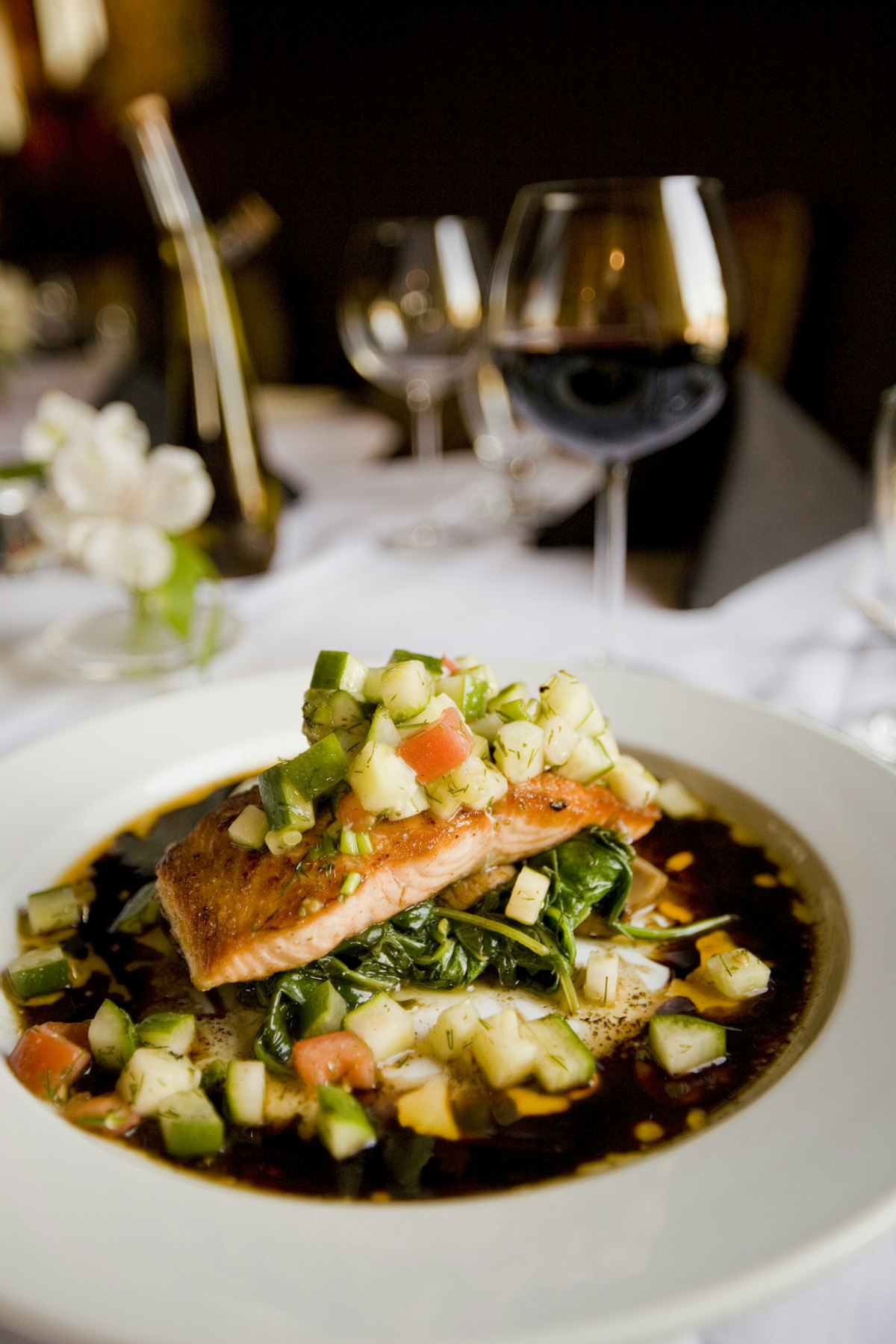
DASH was designed for blood pressure, not fat loss — but its food structure happens to be highly effective for both when calories are managed. The mechanism is straightforward:
- High vegetable volume fills the stomach with few calories
- Adequate lean protein (fish, poultry, legumes) supports satiety and muscle retention
- Whole grains digest slowly, producing steady energy and reducing hunger spikes
- Limited sweets and processed foods removes the most hyperpalatable calorie sources
- Low sodium reduces water retention, producing early visible results that reinforce adherence
Studies comparing DASH to other diets for weight loss show it performs comparably to Mediterranean and low-glycaemic diets when calories are matched — confirming that it's the calorie deficit, not any specific mechanism in DASH, that drives fat loss. DASH provides an excellent food structure for creating that deficit comfortably.
DASH tells you what to eat — the food groups, proportions, and sodium limits. A calorie target tells you how much. For fat loss, you need both:
- Calculate your TDEE and set a 300–500 kcal daily deficit
- Build your meals within DASH food groups
- Track sodium alongside calories — most tracking apps include sodium data
- Recalculate your calorie target every 4–6 weeks as your weight changes
DASH vs Mediterranean vs Low-Carb: A Comparison
| DASH | Mediterranean | Low-Carb | |
|---|---|---|---|
| Primary goal | Blood pressure reduction | Cardiovascular health | Blood sugar / fat loss |
| Carbohydrates | Moderate (whole grains) | Moderate (whole grains) | Very low (<50–130g/day) |
| Dairy | Low-fat dairy encouraged | Limited (mostly yogurt/cheese) | Variable |
| Fat | Low-moderate (unsaturated) | High (olive oil, nuts, fish) | High (often unrestricted) |
| Red meat | Strictly limited | Occasional | Often encouraged |
| Sodium focus | Core requirement | Not specifically restricted | Not specifically restricted |
| Evidence for BP | Strongest | Strong | Moderate |
| Ease of long-term adherence | High (no elimination) | High (flexible) | Lower (restrictive) |
Common DASH Diet Mistakes
- Eating too many whole grains. Six to eight servings of grains per day is more than most people realise — but those servings are small (½ cup cooked rice, 1 slice bread). If you're eating 2 cups of rice in a sitting, you've consumed 4 servings at once, and your calorie total climbs quickly.
- Ignoring sodium in "healthy" foods. Cottage cheese, canned chickpeas, stock-based soups, and some Greek yogurts contain significant sodium. Always check the label. Rinse canned legumes to reduce sodium by 30–40%.
- Treating nuts as daily staples. DASH recommends 4–5 weekly servings of nuts, not daily. At 165–200 kcal per 30g serving, eating them daily adds 1,000+ kcal per week above the intended pattern.
- Using full-sodium stock and condiments. A tablespoon of soy sauce contains around 900mg of sodium — nearly half the standard daily limit. Use reduced-sodium versions or herbs and spices instead.
- Not adjusting calories for your size. The official 2,000 kcal tier is a midpoint, not a universal target. A sedentary 55 kg woman may need 1,400–1,600 kcal. An active 90 kg man may need 2,600–3,000 kcal. Always start from your personal TDEE.
- The DASH diet is a food-quality and proportion framework — it tells you what to eat. Your calorie target, calculated from your TDEE, tells you how much.
- Official DASH tiers are 1,600, 2,000, and 2,600 kcal/day — but your personal target should be calculated from your actual TDEE, not approximated from a category.
- The four nutritional drivers of DASH's blood pressure benefit are potassium, magnesium, calcium, and low sodium — all achieved through whole food proportions, not supplements.
- Sodium is the hardest component to manage. Single restaurant meals or processed foods can consume your entire daily allowance. Home cooking is effectively non-negotiable for consistent compliance.
- For fat loss, combine DASH food groups with a calorie deficit. The pattern alone improves health markers; the deficit produces fat loss.
- Nuts are a weekly DASH recommendation (4–5 servings per week), not daily — a common misreading that silently adds significant calories.
- DASH outperforms most diets for long-term adherence because it eliminates nothing — it proportions everything.
Find your personalised TDEE and set the right calorie level for your DASH diet — whether your goal is blood pressure, fat loss, or both.
Try EatHelper Free →